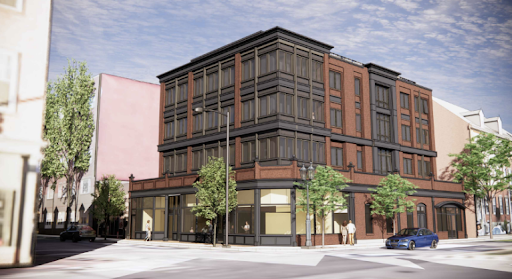
PROJECT OVERVIEW
Site: Former Jerry’s Department Store
New Construction: Mixed-use redevelopment with ground-floor commercial space and residential units above
Current Proposal: up to 30 apartments with no on-site parking
Review Process: Salem Redevelopment Authority, Design Review Board, Planning Board, and Zoning Board of Appeals
The project at 301 Essex Street proposes the redevelopment of the former Jerry’s Department Store property at the prominent downtown intersection of Essex, North, and Summer Streets.
Because of its visibility and location within Salem’s commercial core, the building’s design, residential density, and street-level tenant mix all carry broader implications for the surrounding neighborhood.
The site has long served as a commercial anchor at this intersection. The existing building dates to 1897 and later became home to Jerry’s Department Store, which operated for decades and gave the property its enduring name. More recently, the building housed Witch City Consignment & Thrift, a locally beloved business that operated there for 18 years.
Current plans include a mixed-use building with ground-floor commercial space and residential units above, with the amended proposal allowing for up to 30 apartments. Earlier versions of the project included a parking garage; however, the current proposal removes on-site parking and instead incorporates transportation demand management measures intended to support residents without dedicated parking spaces.
The project has proceeded through multiple City review bodies—including the Salem Redevelopment Authority, Design Review Board, Planning Board, and Zoning Board of Appeals—as part of Salem’s downtown design and planning review process. The Planning Board approved the amended site plan in early 2026.
WHY IT MATTERS
Historic Salem, Inc. (HSI) has been actively engaged in the design review of this project since 2022, participating in public meetings and providing written feedback to City review boards.
Because the site sits at a key gateway to downtown Salem—and directly across from the Jonathan Corwin House (the Witch House)—HSI has emphasized the importance of thoughtful architectural treatment at this highly visible intersection.
HSI has generally viewed the building design and massing favorably, particularly as the project reuses a well-known commercial structure at a key downtown gateway. HSI has, however, shared concerns with neighbors and other stakeholders about the increase in unit count, the small size of some apartments, and the lack of on-site parking, which may place additional pressure on surrounding streets and nearby neighborhoods.
HSI has also emphasized the importance of the ground-floor commercial space serving Salem’s year-round residential community rather than being oriented primarily toward tourism. During review, the Salem Redevelopment Authority requested more specific information about the future commercial tenants, reflecting the importance of that street-level use to the success of the project.
As the project moves forward, HSI continues to monitor how the final residential program, parking approach, and commercial tenancy will affect the surrounding downtown neighborhood.
Have questions or want to stay informed? Community voices play an important role in shaping Salem’s future.
Here’s how you can help: